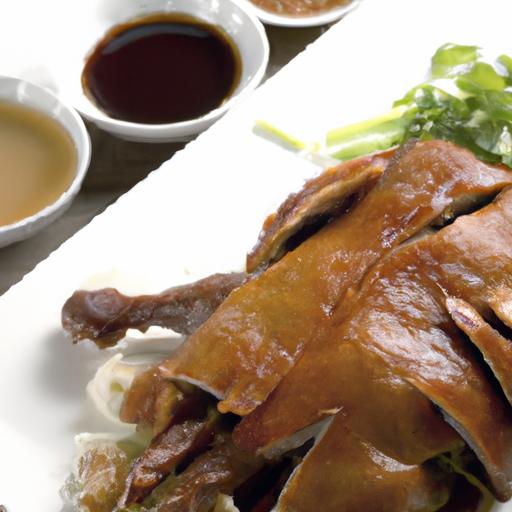

Few dishes capture the essence of Chinese culinary artistry quite like Peking Duck-a symphony of crispy skin, tender meat, and rich, aromatic flavors that dance on the palate. Mastering this iconic dish is both a journey and a festivity, blending tradition with technique to create a masterpiece worthy of any dining table. In this guide, we’ll unravel the secrets behind achieving that perfect crackling skin and succulent center, offering you a step-by-step path to bringing this legendary recipe to life in your own kitchen.Prepare to elevate your cooking skills and delight your senses with the unforgettable taste of authentic Peking Duck.
Mastering Peking Duck begins with selecting the perfect duck to ensure that irresistible balance of tender meat and ultimate crispiness. The ideal choice is a young Pekin duck weighing around 5 to 6 pounds-plump, with a smooth, unblemished skin that will crisp beautifully during cooking.A slightly fatty bird is key, as fat renders underneath the skin, creating that glossy, crackling surface that defines this iconic dish.
Prep and Cook Time
- Preparation: 30 minutes (plus 12 hours for air-drying)
- Cook Time: 1 hour 15 minutes
Yield
Serves 4 to 6 people
Difficulty Level
Advanced – requires attention to detail and patience for perfect results
Ingredients
- 1 whole Pekin duck (about 5-6 lbs), cleaned and patted dry
- 4 cups boiling water
- 1/4 cup maltose or honey (for glazing)
- 2 tbsp Chinese five-spice powder
- 1 tbsp white pepper
- 1 tbsp Shaoxing wine
- 1 tbsp soy sauce
- 2 tsp salt
- 3-inch piece of ginger, sliced
- 3 scallions, cut into chunks
- 2 star anise pods
- Thin mandarin pancakes, for serving
- Hoison sauce, to taste
- Fresh cucumber and scallions, julienned, for garnish
Instructions
- Choose and prep the duck: Rinse your duck thoroughly inside and out, removing any excess fat. Pat dry with paper towels. Use a small hook or needle to gently separate the skin from the meat, being careful not to tear it.
- Boil and tighten skin: Pour 4 cups boiling water evenly over the duck’s skin while suspending it on a hook or rack. This tightens the skin, a vital step for crispiness. Immediately pat the skin dry.
- Prepare the marinade: In a bowl, combine Chinese five-spice powder, white pepper, Shaoxing wine, soy sauce, and salt. Rub this mix thoroughly inside the duck cavity for authentic flavor depth.
- Marinate aromatics: Stuff the ginger, scallions, and star anise inside the cavity to infuse fragrance as the duck roasts.
- Glaze the skin: Dissolve maltose or honey in a few tablespoons of hot water to create a glossy glaze. Brush this evenly over the duck’s skin.
- Air-dry the duck: Hang the duck in a cool, dry, and well-ventilated place or refrigerate uncovered for 12 hours or overnight. This step is crucial for drying and crisping the skin during the roast.
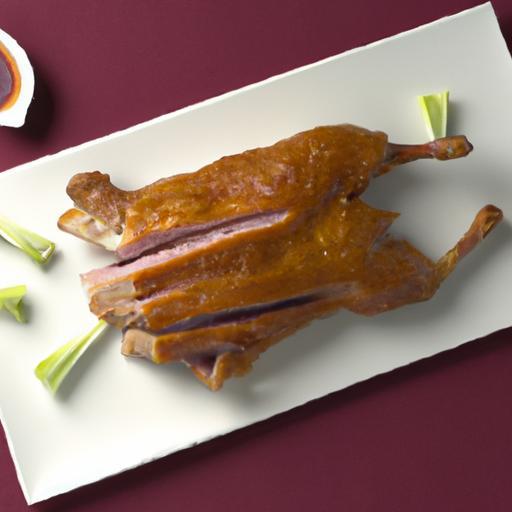
- Roasting: Preheat the oven to 375°F (190°C). Place the duck breast-side up on a rack in a roasting pan. Roast for 1 hour 15 minutes, basting every 20 minutes with additional glaze, until the skin turns a deep reddish-brown, shiny, and crackles pleasingly with a gentle tap.
- Rest the duck: Let the duck rest for 10 minutes post-roast to redistribute juices and keep the meat tender.
- Slice and serve: Traditionally, slice the crispy skin separately from the meat. Serve on warm mandarin pancakes with thin cucumber and scallion sticks, and a generous smear of hoisin sauce for that authentic Peking Duck experience.
chef’s notes & Tips for Success
- Duck selection: If Pekin ducks aren’t available, a similar breed that is plump with ample fat under the skin works well.
- Air drying: Patience here pays off. The quality of the air-dry step directly influences the crackling finish-don’t skip or shortcut.
- Glazing alternatives: Maltose gives that classic lacquered finish, but honey can be used as a natural substitute with slightly sweeter notes.
- Use a thermometer: Check internal temperature aiming for 165°F (74°C) for safe doneness while ensuring crispy perfection.
- Make-ahead: Glide through those prep steps a day ahead, then roast the duck the next day for maximum flavor development and ease.
Serving Suggestions
Present your beautifully carved duck on a wooden board or platter,the skin glistening with golden crispiness and the meat juicy beneath.Fan out thin Mandarin pancakes beside it, alongside bowls of hoisin sauce, crisp cucumber batons, and fresh scallion sticks. Garnish with a sprinkle of toasted sesame seeds and a few sprigs of fresh cilantro for contrast. Pair with a light jasmine tea or a radiant Riesling to cleanse the palate between bites, elevating the entire peking Duck experience.

| Nutrition | per serving |
|---|---|
| Calories | 550 kcal |
| Protein | 45g |
| Carbohydrates | 8g |
| Fat | 35g |
For a deeper dive into classic Chinese sauces, visit Serious Eats. To complement your duck with customary Chinese tea pairings, check out our internal guide here.
Q&A
Q&A: Mastering Peking Duck – A Crispy, Flavorful Recipe Guide
Q1: What makes Peking Duck so special compared to other roast duck recipes?
A1: Peking duck is an artful balance of culinary craftsmanship and tradition.Its hallmark is the irresistibly crispy skin paired with tender,juicy meat. Unlike typical roast ducks, Peking Duck goes through a meticulous process of air-drying and glazing, which creates that signature crunch and lacquered appearance. It’s not just food-it’s a sensory experience that combines texture, aroma, and flavor in every bite.
Q2: How do you achieve the iconic crispy skin of Peking Duck?
A2: The secret lies in preparation and patience. After cleaning, the duck is inflated or hung to dry for several hours, allowing the skin to separate from the fat layer beneath.Then, it’s brushed with a special maltose syrup glaze that caramelizes during roasting. roasting at high heat renders out fat and crisps the skin to perfection-like edible crackle that crackles with every bite.
Q3: Is it necessary to air-dry the duck, and if so, why?
A3: Absolutely! Air-drying is crucial. By hanging the duck in a cool, airy surroundings, the skin dries out, which helps prevent steaming during roasting. This step ensures the skin crisps up instead of staying soggy. It’s a little patience that pays off big on texture.
Q4: What ingredients are essential for the marinade and glaze?
A4: The marinade combines fragrant Chinese five-spice,soy sauce,Shaoxing wine,ginger,and sometimes star anise for warmth. The glaze is traditionally maltose syrup mixed with a touch of vinegar and water, providing a shiny, caramelized finish. These ingredients infuse savory depth and that lovely reddish-golden hue characteristic of Peking Duck.
Q5: Can I replicate Peking Duck at home without specialized equipment?
A5: You can! While professional chefs use wood-fired ovens or specialized roasting hooks, a conventional oven works fine with the right techniques. using a rack to elevate the duck and maintaining high heat during roasting helps mimic traditional methods. Air-drying, glazing, and careful timing are your best allies in achieving restaurant-quality results at home.Q6: how is Peking Duck traditionally served?
A6: Traditionally, the duck is carved tableside into thin slices with skin and a bit of meat. It’s served with thin Mandarin pancakes, scallions, cucumber, and a sweet bean or hoisin sauce. Diners assemble their own wraps, enjoying the interplay of crunchy skin, tender meat, fresh veggies, and luscious sauce-a symphony of flavors and textures.
Q7: Any tips for beginners attempting their first Peking Duck?
A7: Start with a fresh, good-quality duck and don’t rush the drying process. Patience is the tagline here. Also, practice careful glazing and watch your oven temperature to avoid burning the skin. Lastly, embrace the experience-it’s just as much about the ritual as the recipe. Even if your first try isn’t perfect, every roast gets better with practice.
Q8: How long does the entire process take from start to finish?
A8: From prep to plating, expect about 2 to 3 days. The day before cooking is mainly for air-drying and marinating,and the final day involves glazing and roasting. It’s a labor of love, but the crispy, flavorful reward makes every step worthwhile.
Q9: Why is Peking Duck considered a symbol of Beijing cuisine?
A9: Peking Duck is a culinary ambassador of Beijing’s rich history and culture. Originating centuries ago, it embodies Imperial grandeur and local ingenuity. Its perfected technique and distinctive flavor profile have made it an iconic dish not only of the capital but of Chinese gastronomy worldwide.
Q10: Can variations of Peking Duck be made to suit dietary restrictions?
A10: While true Peking Duck centers on duck meat and crispy skin, creative cooks can adapt elements. for instance, vegetarian versions use roasted eggplant or mushrooms with similar spices and sauces. For low-fat options, skinless duck or option cooking methods can be explored, though some texture and flavor nuances will naturally shift.
Mastering Peking Duck is a journey through taste, tradition, and texture. With these insights, you’re ready to embark on your own crispy, flavorful adventure-one flapjack-thin slice at a time!
in Summary
As the final crackle of your perfectly roasted Peking duck fades, what remains is more than just a meal-it’s a culinary triumph steeped in centuries of tradition and infused with your own touch of mastery. By understanding the meticulous steps that create that irresistible crispy skin and succulent, flavorful meat, you’ve unlocked the secrets behind one of China’s most iconic dishes. Whether sharing it with loved ones or savoring it as a personal achievement,this guide empowers you to bring the authentic taste of Beijing’s famed delicacy into your own kitchen. So roll your pancakes,sprinkle the scallions,and dive in-as mastering Peking duck is not just about cooking; it’s about crafting an unforgettable experience one crisp,tender bite at a time.