
Picture this: golden, crispy spheres filled with tender octopus, a symphony of flavors dancing on your tongue with every bite. Takoyaki, japan’s beloved street food, is more than just a snack-it’s a cultural experience wrapped in a warm, savory embrace. whether you’re a curious foodie or an adventurous home cook, mastering the art of takoyaki opens the door to a world where tradition meets tasty innovation. In this step-by-step guide,we’ll unravel the secrets behind perfecting these iconic octopus balls,from batter basics to the ideal fillings and finishing touches. Get ready to embark on a culinary journey that turns your kitchen into a bustling Osaka street corner, one takoyaki ball at a time.
Mastering Takoyaki: A Step-by-Step Japanese Octopus balls Guide
mastering Takoyaki begins with an understanding of how every element-from selecting fresh ingredients to perfecting your technique-plays a crucial role in achieving those irresistibly crispy,fluffy,and savory octopus balls. Originating from Osaka’s vibrant street food culture, these bite-sized delights bring together simple components with a magic touch of culinary finesse, turning a humble batter into little spheres of joy.
Prep and Cook Time
- Preparation: 20 minutes
- Cooking: 15 minutes
- Total Time: 35 minutes
Yield
Approximately 24 takoyaki balls (4 servings)
difficulty Level
Medium – requires some practice for perfect shaping and flipping
Ingredients
- 1 cup all-purpose flour, sifted for smooth batter
- 2 large eggs, at room temperature
- 2 ½ cups dashi stock (homemade or high-quality store-bought)
- 150g cooked octopus, diced into ½-inch pieces
- 3 green onions, finely chopped
- ¼ cup tenkasu (tempura scraps) for extra crunch
- Pickled ginger (beni shoga), chopped, around 2 tablespoons
- Takoyaki sauce, for drizzling (available at Japanese grocery stores)
- Japanese mayonnaise, to taste
- aonori (dried seaweed flakes) for garnish
- Katsuobushi (bonito flakes), generous handful
- Vegetable oil, for greasing the pan
Instructions
- Prepare the batter: In a large bowl, whisk together the sifted flour, eggs, and cold dashi stock until the mixture is smooth and slightly runny. Make sure there are no lumps for that delicate texture.
- Heat the takoyaki pan: Place it over medium heat and grease each mold generously with vegetable oil using a brush or paper towel. A well-oiled pan prevents sticking and gives the perfect crust.
- Pour the batter: Pour enough batter to fill each cavity slightly over the brim; takoyaki should puff out beautifully.
- Add the fillings: Quickly drop the diced octopus, green onions, tenkasu, and pickled ginger into each cavity within the batter. the fillings ensure bursts of flavor and texture contrast.
- Cook and shape: After about 1-2 minutes,once the edges start to firm up,use a takoyaki pick or skewer to gently turn each ball 90 degrees.Allow uncooked batter to seep out and form a round shape.
- Flip and cook thoroughly: continue turning the balls every 30 seconds to evenly brown all sides. The goal is a golden, crispy shell and a moist, fluffy interior. This process takes about 5-7 minutes total.
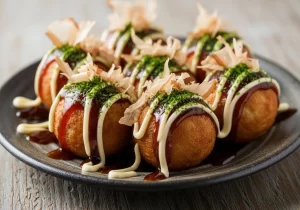
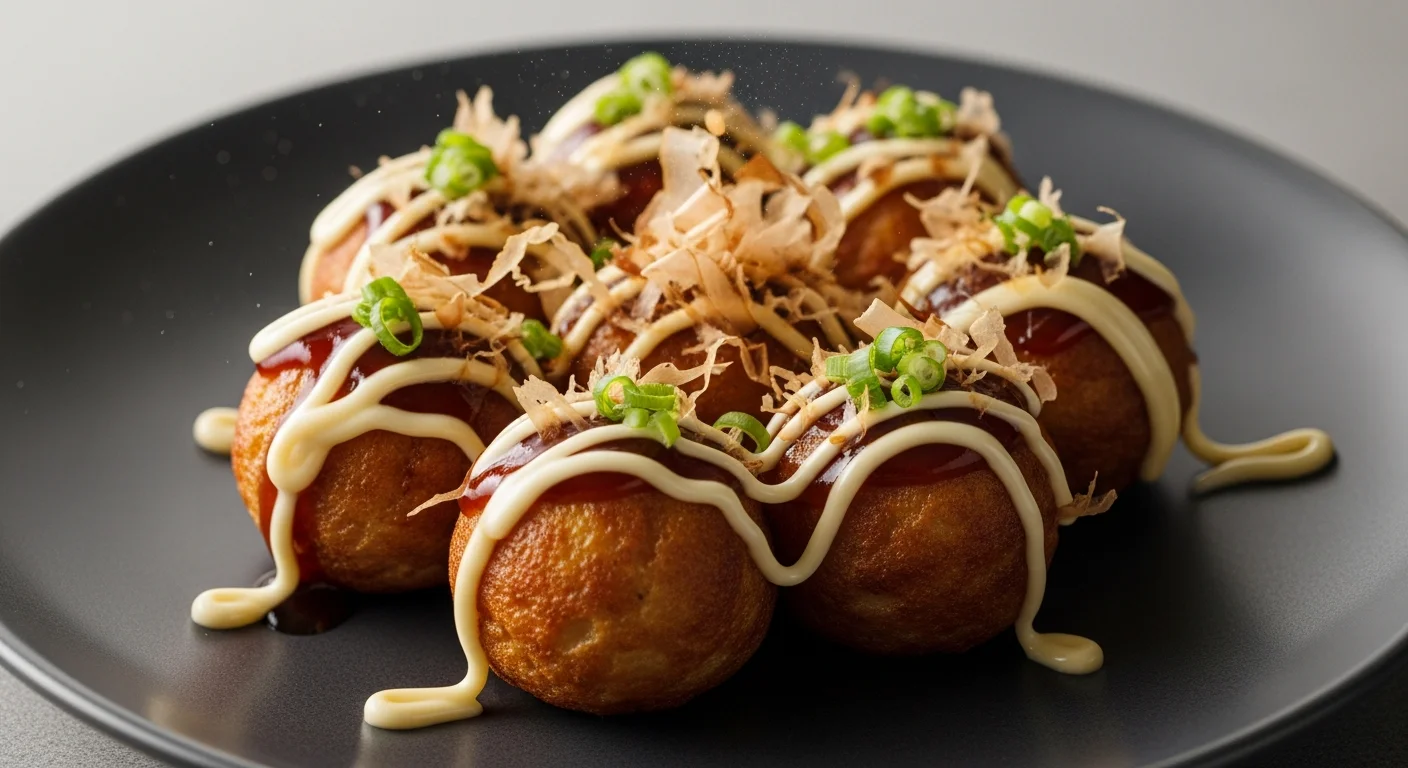
- Serve hot: Once evenly cooked, transfer the takoyaki onto a serving plate. Drizzle with takoyaki sauce and Japanese mayonnaise, then sprinkle aonori and a handful of katsuobushi on top.
Chef’s notes: Tips for Success
- Choosing octopus: Fresh or frozen octopus both work well, but make sure it is tender. Boil frozen octopus gently before dicing if needed.
- Batter consistency: The batter should be slightly thinner than pancake batter to create the right crispy texture.
- Flipping technique: Practice turning the takoyaki balls with steady wrist movements rather than forceful flips to maintain their perfect spherical shape.
- Make-ahead tip: The batter can be prepared an hour ahead and kept refrigerated; briefly whisk before use.
- Substitutions: For a twist, substitute octopus with shrimp or cheese – a great option for picky eaters.
Serving Suggestions
Arrange your takoyaki on a traditional wooden plate or bamboo leaf for authentic presentation. Serve with extra sauce on the side and a simple cucumber sunomono salad to refresh the palate. pair with chilled green tea or a light Japanese beer for the ultimate street food experience. Don’t hesitate to garnish with fresh shiso leaves or a sprinkle of chili powder for a spicy kick.
| Nutritional Info (per 6 balls) | Calories | Protein | Carbs | Fat |
|---|---|---|---|---|
| Approximate Values | 320 kcal | 15 g | 38 g | 8 g |
Essential Tools and Equipment for Effortless Cooking Takoyaki
To truly excel in mastering takoyaki,equip yourself with a quality cast iron or electric takoyaki pan featuring round molds. This key tool ensures even heat distribution and consistent browning. A long bamboo or metal skewer is indispensable for flipping the balls smoothly without breaking the delicate shape. Additionally, a small oil brush speeds up the greasing process, while a heatproof spatula helps with transferring finished takoyaki to the platter.
Crafting the Ideal batter for Crispy and Fluffy Octopus Balls
The magic of takoyaki lies in the batter’s balance-thin enough to cook through quickly but robust enough to envelope the octopus and toppings. Using chilled dashi stock enriches the flavor intensely, while sifted flour and whisked eggs create a silken texture. Avoid overmixing to keep the batter light, and remember that temperature control during cooking plays a huge role in achieving fluffy interiors paired with golden, crispy exteriors.
Expert Techniques for Shaping and Flipping Takoyaki Like a Pro
patience is your greatest ally. Begin turning the partially cooked balls early, gently coaxing loose batter to fill gaps and seal the spheres. Use the skewer to rotate takoyaki 90 degrees, then keep turning every 30 seconds to prevent burning and promote an even golden crust. Mastering these rotations ensures the quintessential ball shape and textural contrast that are hallmarks of authentic takoyaki.
Learn how to make rich Japanese dashi stock to elevate your takoyaki batter.
For more on the cultural history and variations, visit Japan Guide – Takoyaki.

Q&A
Q&A: Mastering Takoyaki – A Step-by-Step Japanese Octopus Balls Guide
Q1: What exactly is Takoyaki?
A1: Imagine golden,crispy spheres on the outside with a tender,savory surprise inside-that’s Takoyaki! Originating from Osaka,Japan,these delightful octopus balls are a beloved street food featuring a wheat flour-based batter cooked with diced octopus,tempura scraps,green onions,and pickled ginger. Each bite delivers a dance of textures and flavors, crowned with a drizzle of Takoyaki sauce, mayo, bonito flakes, and aonori seaweed.
Q2: Why is Takoyaki so popular in Japan?
A2: Beyond its deliciousness, Takoyaki embodies the fun and communal spirit of Japanese street food culture.It’s quick, affordable, and customizable. Plus, watching the magic unfold as vendors skillfully turn the batter in special griddles is practically performance art! Its roots in Osaka, the kitchen of Japan, have helped it earn a reputation as comfort food that warms both belly and soul.
Q3: What equipment do I need to make Takoyaki at home?
A3: Your secret weapon is a Takoyaki pan-essentially a cast iron or non-stick griddle with deep half-spherical molds. You also need a pair of skewers or chopsticks for flipping the balls during cooking. While the pan might look intimidating, mastering it turns the cooking process into a delightful challenge and craft.
Q4: How do I prepare the Takoyaki batter?
A4: The batter is deceptively simple yet crucial. Start with wheat flour, dashi stock (a savory Japanese broth), eggs, and a touch of soy sauce. The broth gives that umami backbone, while the eggs and flour ensure a crispy-yet-chewy texture. It’s all about balance-the batter should be thin enough to fill the molds but thick enough to hold together.
Q5: What are the key fillings and toppings?
A5: The star filling is fresh chopped octopus. To elevate the flavor and texture, add tempura scraps (tenkasu), green onions, and pickled ginger. Once cooked, lavish the balls with tangy Takoyaki sauce and creamy Japanese mayo. A sprinkle of bonito flakes and green aonori seaweed completes the sensory experience-both visually and in taste.
Q6: Any tips for perfecting the flip technique?
A6: Patience and a gentle touch are your friends here. Pour batter generously into each mold, add fillings, and wait until the edges begin to crisp. use skewers to carefully turn the batter 90 degrees to form a half-ball, then continuously rotate to create the perfect sphere. It’s like juggling little golden moons-practice makes perfect!
Q7: Can I customize Takoyaki for different diets or tastes?
A7: Absolutely! While octopus is traditional,adventurous cooks substitute with shrimp,cheese,or even vegetables for a vegetarian twist. Vegan options might swap dashi for kombu (seaweed) broth and use plant-based fillings. The versatility makes Takoyaki a canvas for culinary creativity.
Q8: How should I serve Takoyaki?
A8: Takoyaki is best enjoyed hot, straight off the griddle for that crispy-exterior and molten interior contrast.Serve on a small plate or boat with chopsticks or toothpicks. It pairs wonderfully with cold beer or green tea and invites communal sharing-because happiness tastes best when shared!
Q9: What are common mistakes to avoid when making Takoyaki?
A9: Overfilling the molds can lead to messy, uneven balls.also, turning too early or too late affects the shape and texture-too soon and the batter breaks, too late and it sticks. Another pitfall is skimping on the dashi; it’s critical for that umami depth. Lastly,don’t rush the flipping ritual-it’s part technique,part rythm.
Q10: Any final advice for takoyaki beginners?
A10: Embrace the process with curiosity and joy. Takoyaki is as much about playfulness as precision. expect a few funny-shaped “octo-moons” before hitting the perfect sphere. And remember, every ball you make is a delicious step closer to mastering this iconic Japanese treat!
The Conclusion
As you close this guide on mastering the art of Takoyaki, you’re now equipped to transform simple ingredients into golden, savory spheres of delight. Each crispy bite carries not just the taste of tender octopus and umami-rich batter, but the spirit of a vibrant Japanese street festival. With patience, practice, and a little creativity, your Takoyaki will go beyond a mere snack-it becomes a warm invitation to share culture, craft, and joy. so fire up that pan, embrace the sizzle, and let your culinary journey roll on-as every perfect Takoyaki starts with a single, confident flip.