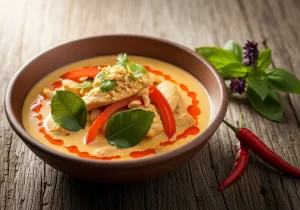

There’s something undeniably magical about the bold, aromatic flavors of Thai Panang curry-a symphony of creamy coconut, fiery chili, and fragrant spices that promises to transport your taste buds straight to the bustling streets of Bangkok. Among its many variations, chicken Panang curry stands out as a beloved classic, perfect for those who crave a comforting yet adventurous meal. But why settle for dining out when you can master this iconic dish in your own kitchen? In this article,we’ll guide you through the art of crafting an authentic chicken Panang curry from scratch,unlocking secrets to balance spice and sweetness,and helping you savor every vibrant bite of this delectable Thai masterpiece. Get ready to transform your home-cooked meals into a party of flavor-one curry spoonful at a time.
Crafting the Perfect Panang Curry Paste From Scratch
Savor the Spice: Mastering Chicken Panang Curry at Home begins with the heart and soul of the dish – a perfectly balanced, fragrant Panang curry paste. This vibrant blend of spices and aromatics infuses every bite with authentic Thai complexity, delivering deep, creamy warmth with a tantalizing hint of heat. Whether you’re new to curry pastes or refining your technique, making Panang curry paste from scratch transforms this classic dish into an unforgettable culinary experience.
prep and cook Time
- Preparation: 25 minutes
- Cooking: 30 minutes
- Total Time: 55 minutes
Yield
- Serves 4 generous portions
Difficulty Level
- Medium – requiring some time but rewarding hands-on flavor mastery
Ingredients
- For the Panang Curry Paste:
- 5 dried red chilies, soaked and deseeded
- 1 tbsp coriander seeds, toasted
- 1 tsp cumin seeds, toasted
- 1/2 tsp white peppercorns
- 4 shallots, peeled and chopped
- 5 cloves garlic, peeled
- 1 stalk lemongrass (white part only), finely sliced
- 1 tbsp galangal, finely grated
- 1 tsp kaffir lime zest (or substitute with lime zest)
- 1 tbsp shrimp paste (kapi), toasted lightly
- 1 tbsp palm sugar
- For the Main Dish:
- 600g chicken thigh fillets, skinless and boneless, sliced thinly
- 1 tbsp vegetable oil
- 400ml coconut milk (preferably full fat and separated into thick cream and watery part)
- 2 kaffir lime leaves, torn
- 1 tbsp fish sauce
- 1 tbsp palm sugar
- 1/4 cup crushed peanuts, toasted (optional garnish)
instructions
- Toast the seeds and peppers: In a dry skillet over medium heat, toast coriander seeds, cumin seeds, and white peppercorns until fragrant, about 2-3 minutes. Allow cooling, then grind finely in a mortar and pestle or spice grinder.
- Prepare the chilies: Soak dried red chilies in warm water for 15 minutes until softened. Drain and remove seeds for milder heat.
- Grind the curry paste: Using a mortar and pestle (or food processor for convenience), pound or blend the softened chilies, ground spices, shallots, garlic, lemongrass, galangal, kaffir lime zest, shrimp paste, and palm sugar until a smooth, sticky paste forms. Scrape sides and add tiny water droplets as needed to achieve a thick consistency.
- Cook the paste: Heat vegetable oil in a wok or wide pan over medium heat. Add 2-3 tablespoons of your freshly made Panang curry paste and sauté until aromatic and the oil begins to separate, about 5 minutes. Stir frequently to prevent sticking.
- Add coconut cream: Pour in the thick coconut cream part (about 1/2 cup) and gently stir to incorporate the curry paste, creating that rich, creamy base. Simmer for 3 minutes.
- Introduce chicken and build flavors: Add sliced chicken thighs and kaffir lime leaves, stirring to coat each piece evenly. Cook until chicken turns opaque, about 7 minutes.
- Balance the curry: Pour in the remaining coconut milk (watery part) to loosen the sauce to your preferred consistency. Stir in fish sauce and palm sugar, then simmer gently for another 10 minutes. Adjust seasoning by tasting and adding more fish sauce, sugar, or lime juice to suit your palate.
- Finish and serve: Once the chicken is tender and the sauce coats the back of a spoon luxuriously, remove from heat. For an added nutty crunch, sprinkle toasted crushed peanuts lightly over the curry before serving.
Tips for Achieving the Creamiest Texture Without Coconut Milk Overload
One secret to an indulgently creamy Panang curry without it becoming overly heavy from coconut milk is to separate the coconut milk into cream and liquid components before cooking.Start by simmering just the thick cream with your curry paste, which helps build a velvety texture. Then, gently incorporate the thinner liquid part slowly towards the end to balance richness and prevent the curry from becoming too oily or runny.This approach also intensifies the aromatic spices, letting each layer shine without dilution.
For added depth, using chicken thigh cuts rather than breast ensures juicy, tender meat that holds up well in coconut milk-based curries.The natural fat content contributes to the luscious mouthfeel, enhancing your savory Savor the Spice: Mastering Chicken Panang Curry at Home experience.
Chef’s Notes
- To make the paste ahead, refrigerate it in an airtight container for up to one week or freeze in portions for up to 3 months.
- For a vegetarian alternative, substitute shrimp paste with miso paste and use tofu or vegetables in place of chicken.
- If fresh herbs like kaffir lime leaves are unavailable, add a few drops of high-quality lime zest oil to capture their citrus essence.
- Balance heat by adjusting the number of dried chilies or by including fresh Thai bird’s eye chilies for an extra kick.
- To keep curry paste smooth, pulse in the food processor in short bursts rather than continuous blending.
Serving Suggestions
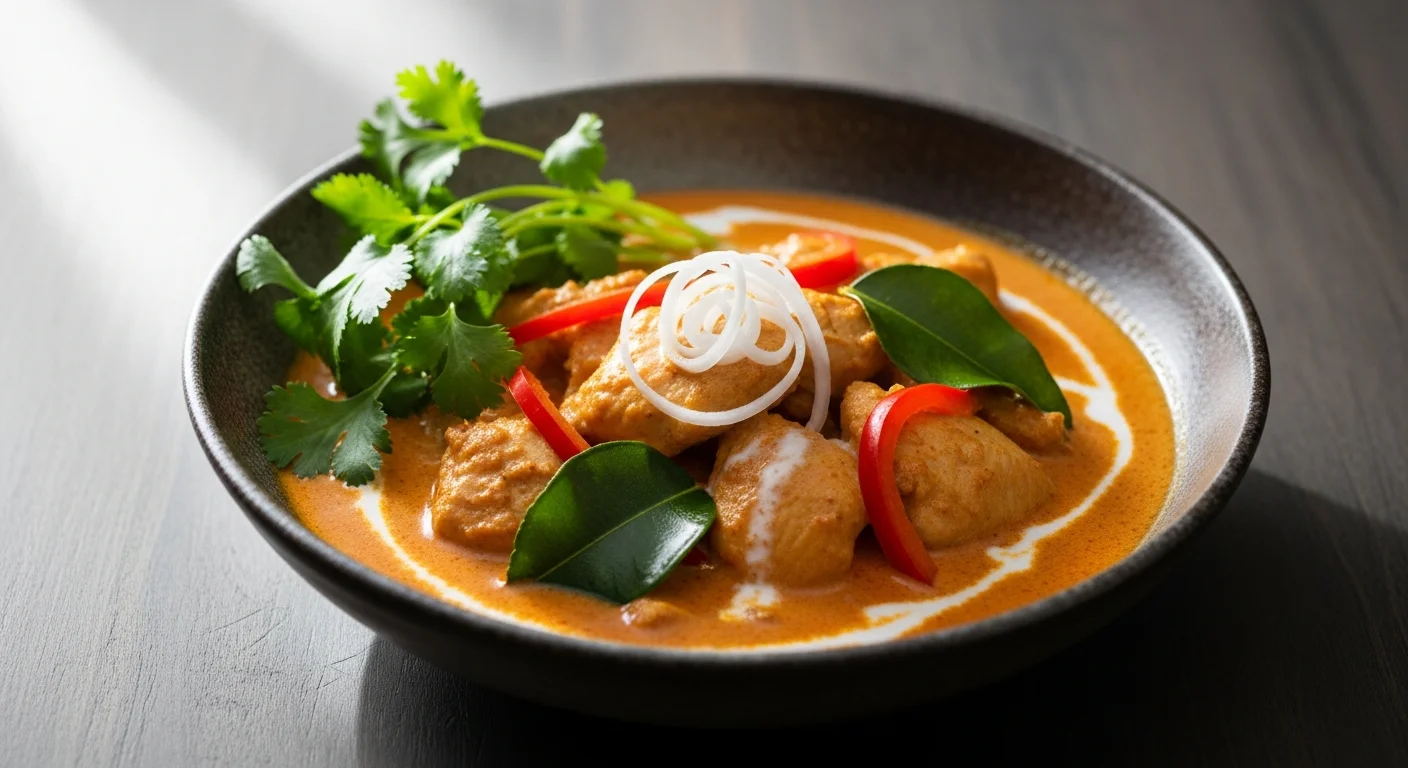
present your Panang curry in a deep, rustic bowl to showcase its stunning rose-red sauce. Serve alongside fragrant jasmine rice or sticky rice to soak up every bit of the flavorful sauce. garnish with torn kaffir lime leaves and a sprinkle of crushed peanuts for texture contrast. A side of lightly blanched green beans or baby bok choy provides freshness and color harmony. For an authentic touch, complement your meal with a chilled Thai iced tea, balancing spice and creaminess perfectly.

| Nutrient | Per serving |
|---|---|
| Calories | 410 kcal |
| Protein | 35g |
| Carbohydrates | 12g |
| Fat | 25g |
For more insights on perfecting Thai curries, check out our ultimate guide to Thai green curry. To deepen your understanding of key Thai ingredients, visit the Serious Eats Thai ingredient glossary.
Q&A
Q&A: Savor the Spice – Mastering Chicken Panang Curry at Home
Q1: What makes Panang curry different from other Thai curries?
A1: Panang curry is a rich, creamy, and slightly sweet curry distinguished by its thick, velvety sauce and a pronounced nutty aroma from ground peanuts. Unlike the fiery green or red Thai curries, Panang delivers a harmonious balance of mellow heat, fragrant spices, and a touch of coconut cream’s silkiness – making it a comforting yet exciting dish to master.
Q2: Why is homemade Panang curry better than store-bought versions?
A2: When you cook Panang curry at home, you control the spice level, freshness of ingredients, and the quality of your curry paste. Homemade curry paste, blended from scratch with aromatic ingredients like kaffir lime zest, dried chilis, and galangal, bursts with vibrant flavors that canned or packaged versions simply can’t match. Plus, cooking it yourself lets you customize every element to suit your palate.
Q3: What are the essential ingredients for authentic Chicken panang Curry?
A3: Beyond chicken,the stars of Panang curry include panang curry paste (a blend of dried red chilies,lemongrass,galangal,garlic,and kaffir lime zest),coconut milk for creaminess,fish sauce for umami depth,palm sugar for subtle sweetness,and ground roasted peanuts for that signature nutty crunch. Fresh kaffir lime leaves are the final flourish,offering a citrusy brightness that elevates the entire dish.Q4: How do I balance the heat and sweetness in Panang curry?
A4: The magic lies in layering flavors thoughtfully. Start with a modest amount of curry paste and gradually add more to dial up the heat. Simmer gently with coconut milk to mellow the spices.Taste as you cook – adding fish sauce brings savory depth, while palm sugar tempers the spice with sweetness. If your curry feels too sharp or spicy, a splash of coconut cream or a pinch more sugar can smooth things out.
Q5: Can I substitute chicken with other proteins or make this dish vegetarian?
A5: Absolutely! Panang curry is incredibly versatile. Swap chicken for beef, pork, shrimp, or tofu. For a vegetarian version, use tofu or hearty vegetables like eggplant, bell peppers, and mushrooms, and replace fish sauce with soy sauce or tamari to keep the umami kick alive. Just remember, whatever protein you choose, give it enough time to soak up those fragrant Panang flavors.
Q6: What’s the secret to achieving the perfect Panang curry sauce texture?
A6: Patience and technique are key.Begin by frying the curry paste in a bit of coconut cream to release its aromatic oils before adding the rest of the coconut milk. this step intensifies flavor and creates a silky, thick sauce. Then, simmer gently to reduce liquid and concentrate taste without breaking the coconut milk. Stir in ground peanuts last for creaminess and texture – this is the secret to that luscious, spoon-coating consistency.
Q7: How should I serve and garnish my Chicken Panang Curry for an authentic experience?
A7: Panang curry is traditionally served piping hot over steamed jasmine rice to soak up every drop of that fragrant sauce. Garnish with finely sliced kaffir lime leaves and a handful of fresh Thai basil or coriander to add vivid color and fresh herbal notes. For an extra touch, sprinkle chopped roasted peanuts on top – it’s a delightful crunch and a signature finish.
Q8: Any tips for beginners tackling Panang curry for the first time?
A8: Start simple: invest in a good-quality Panang curry paste or try making a small batch at home with a reliable recipe.don’t rush the cooking process – let the paste fry slowly and the sauce simmer gently. Taste frequently and adjust seasonings thoughtfully; balancing the salty, sweet, and spicy is the heart of this dish. And most importantly, embrace the adventure – Panang curry is as much about the joy of cooking as it is about savoring bold flavors!
Insights and Conclusions
As your kitchen fills with the rich aroma of coconut milk mingling with fiery panang curry paste, you’ve taken more than just a culinary journey-you’ve embraced a vibrant tradition. Mastering Chicken Panang Curry at home isn’t simply about following a recipe; it’s about savoring each layer of spice,balancing heat and sweetness,and crafting a dish that tells a story with every bite. So, whether you’re an adventurous cook or a seasoned spice lover, let this flavorful masterpiece inspire your next meal, turning ordinary days into unusual feasts. Happy cooking, and may your taste buds forever dance to the rhythm of Panang curry!